Dual Chamber with Radar

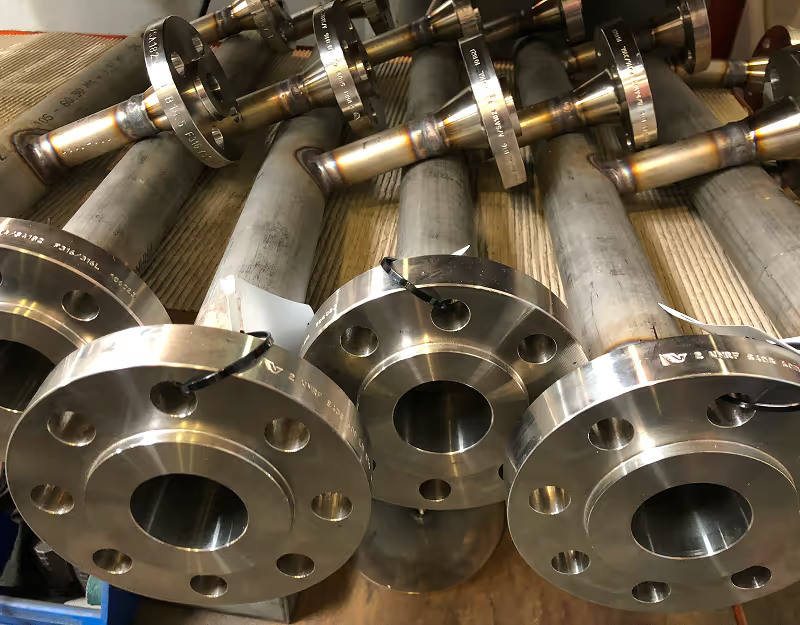
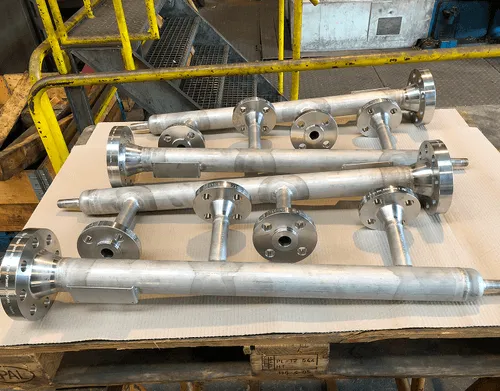
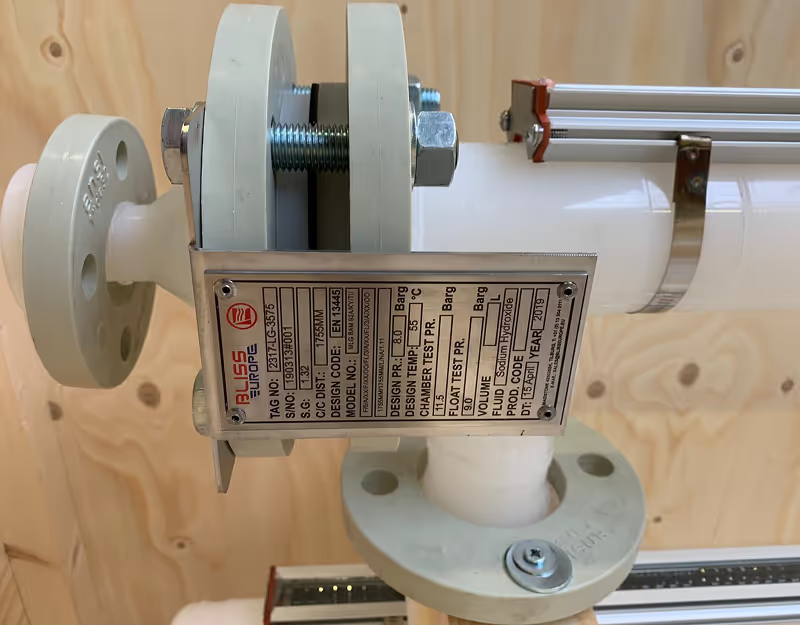
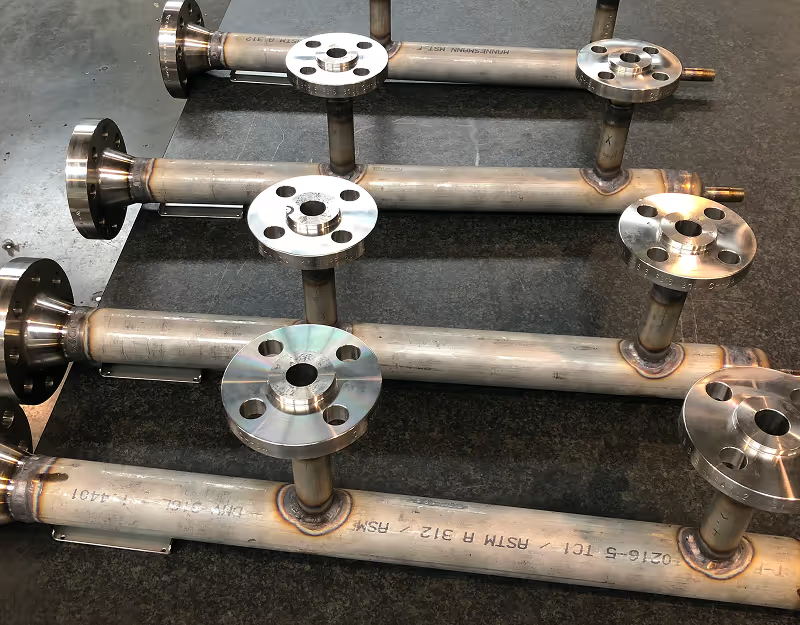
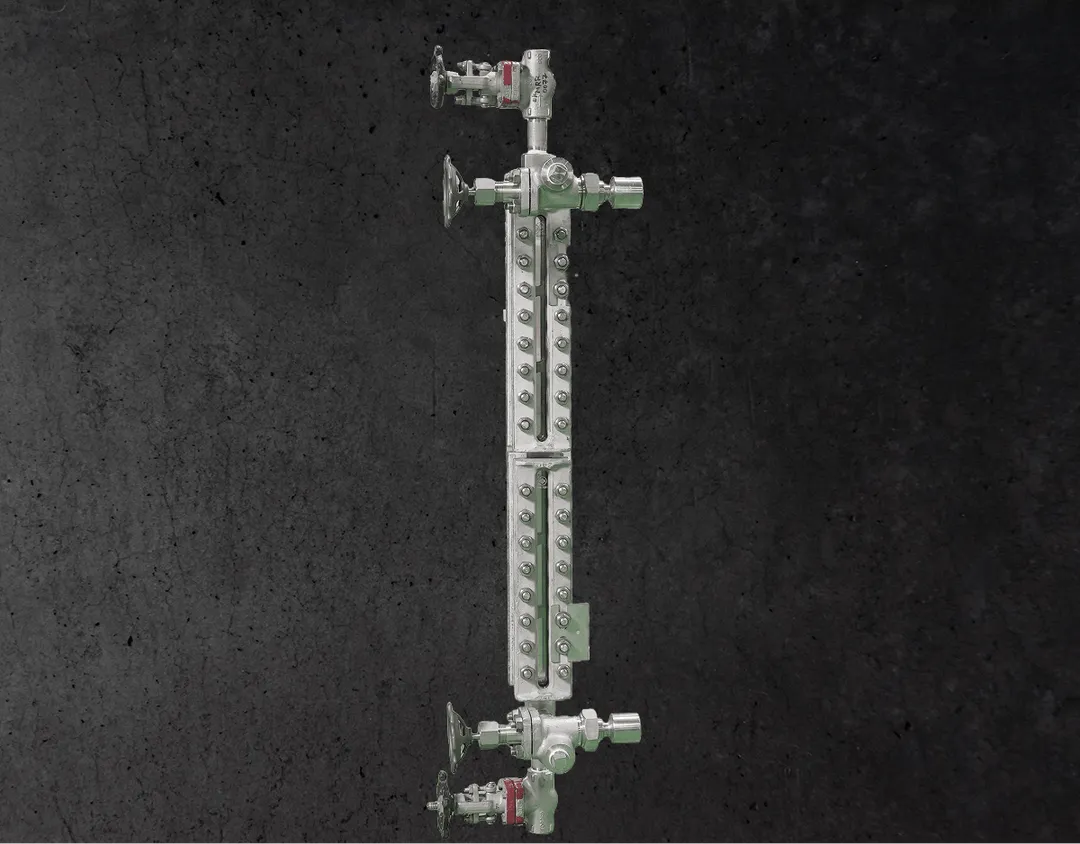
Bliss Instrument Chambers are designed to the ASME B31.3 standards, and are Pressure Equipment Directive (PED) complaint. They have weld neck flanges and full penetration welds in accordance with EN ISO 15614-1:2004, and ASME Boiler and Pressure Vessel Code Section IX are used throughout. There are two designs available: the Standard Design and T-piece Design.

Product Overview

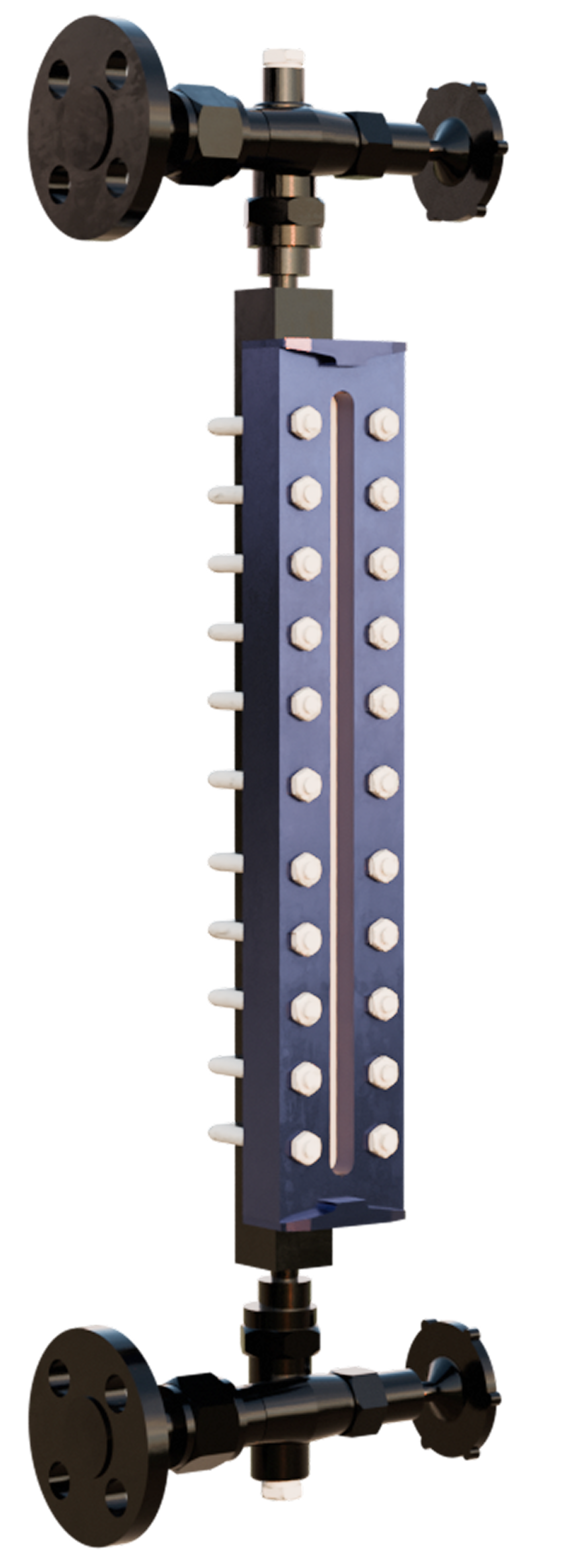
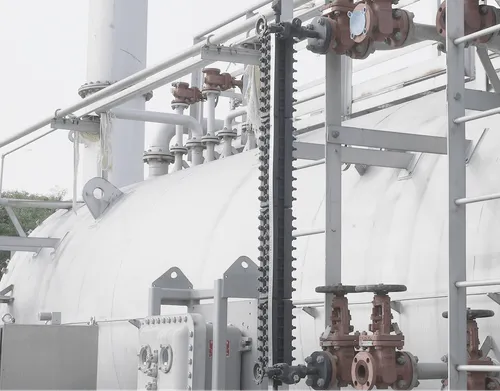
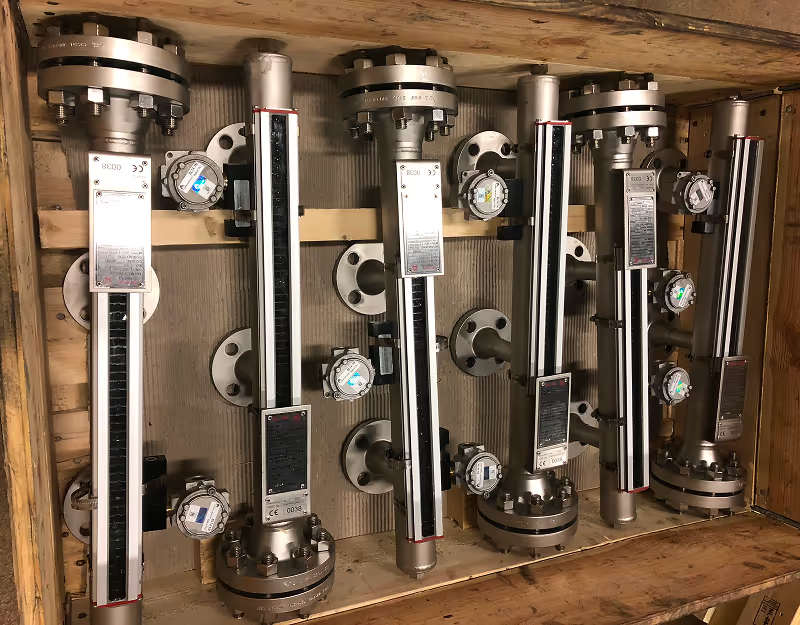
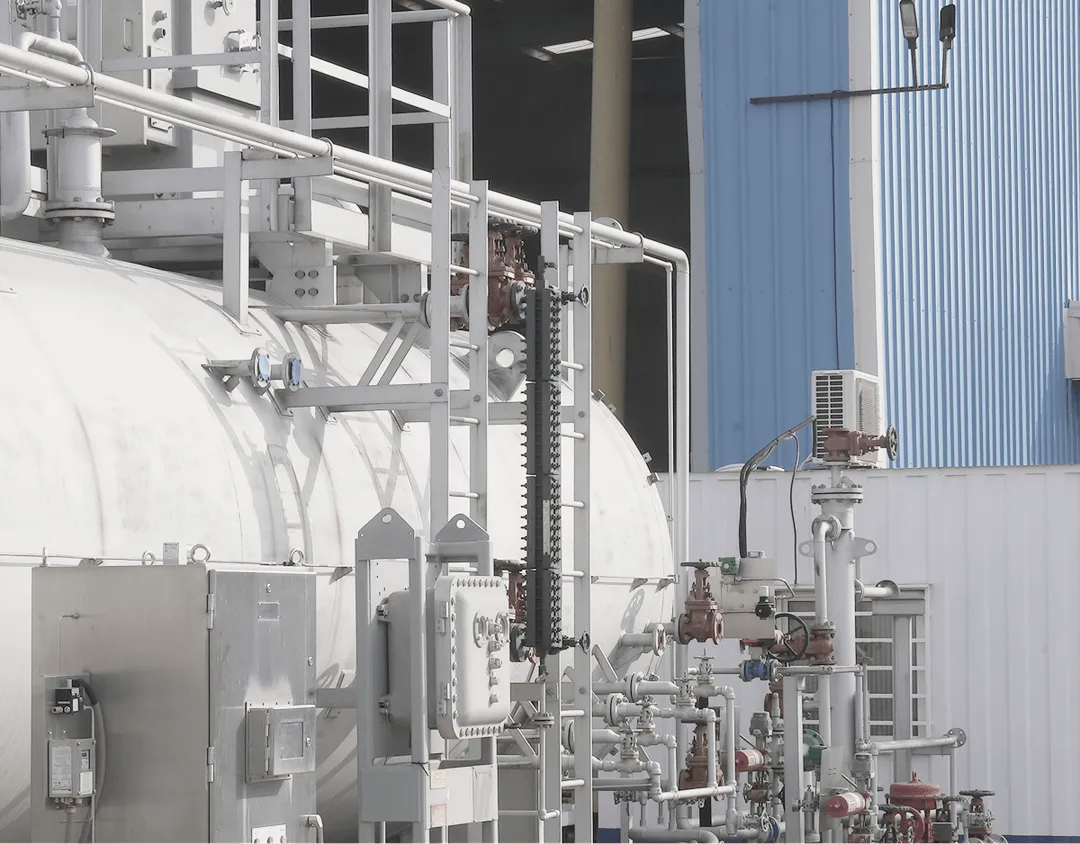
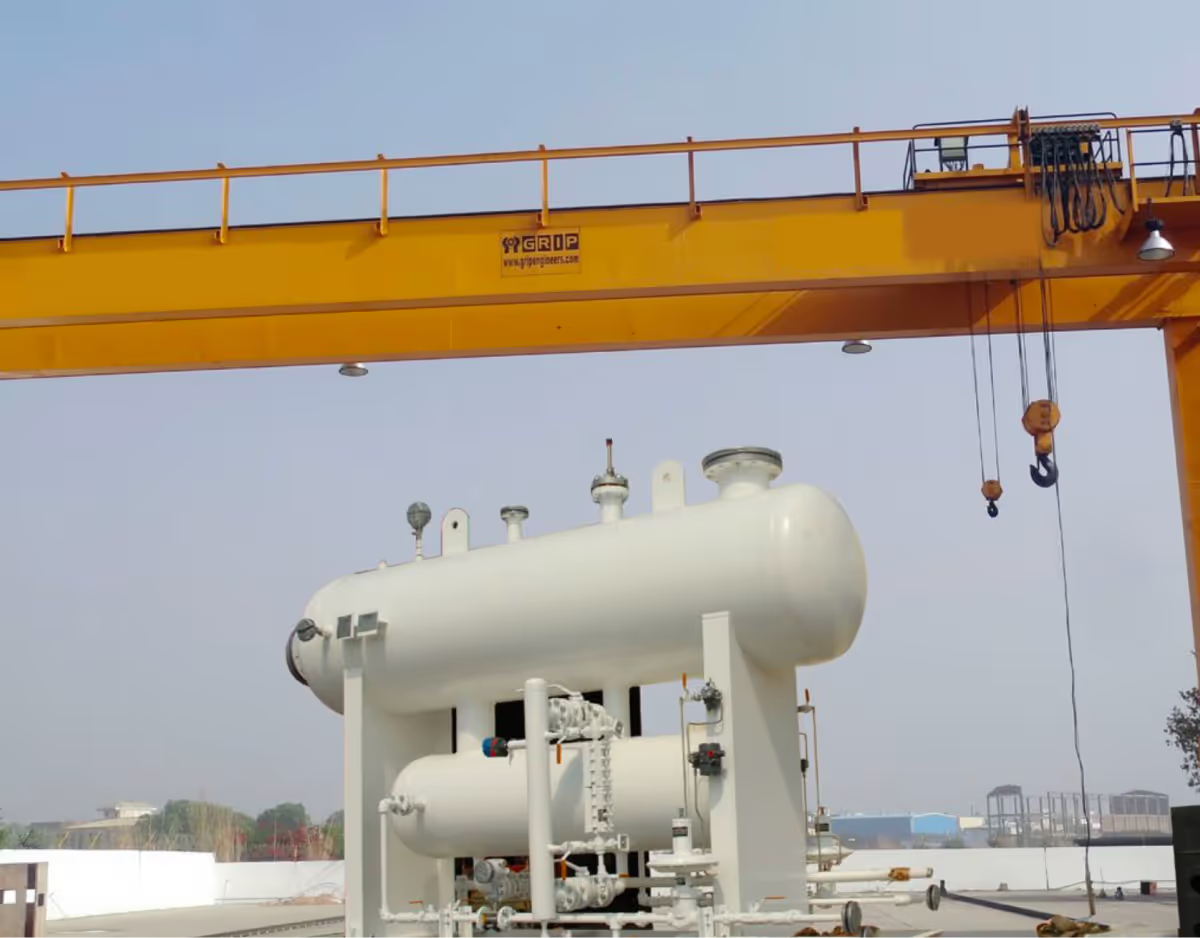
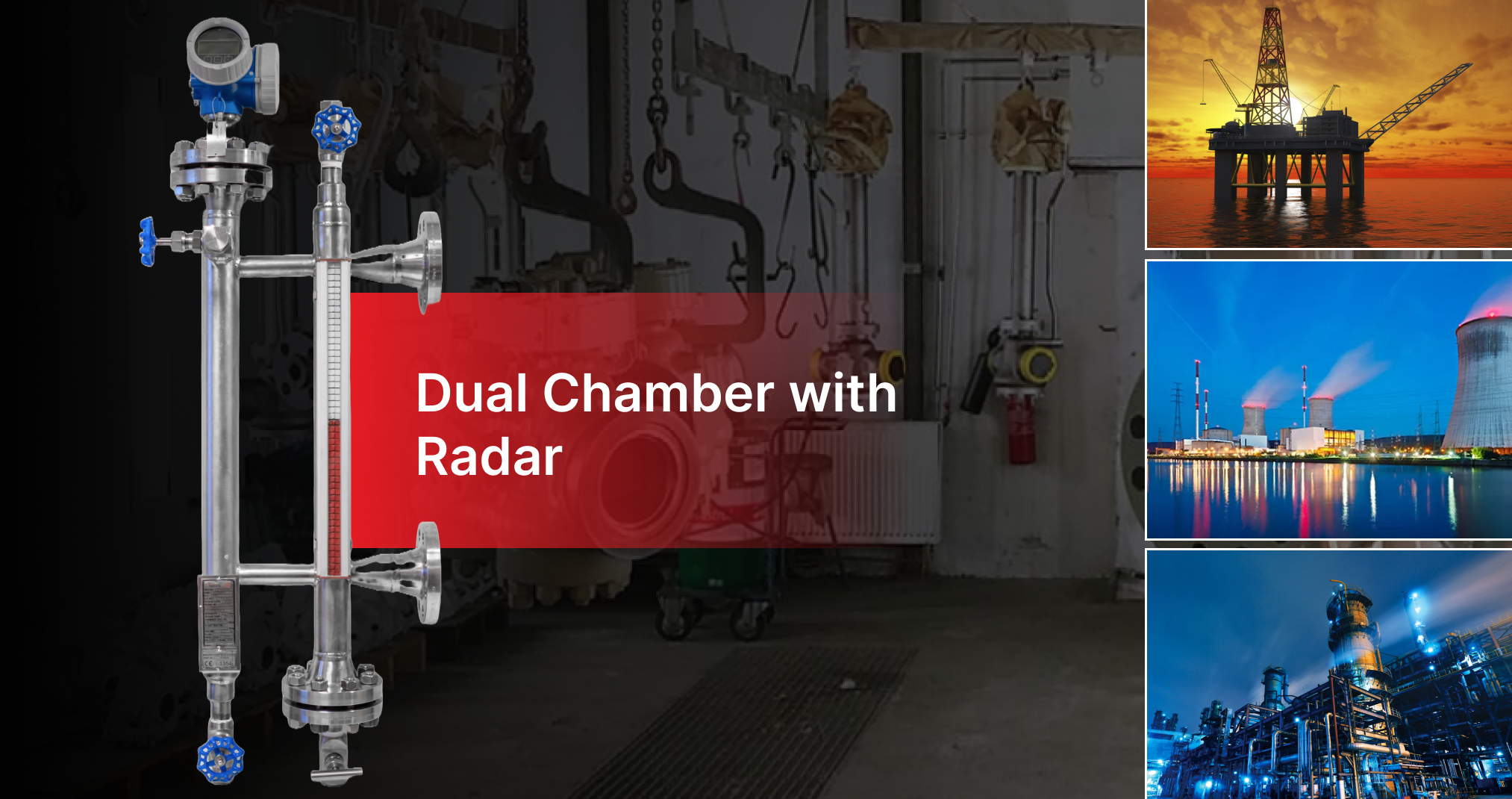
The dual-chamber system is built around two parallel external bypass chambers, both bolted to the same upper and lower process tap points on the vessel. Each chamber tracks the vessel level through hydraulic communication, and each carries an independent measurement device:

  • Chamber 1 - a magnetic level gauge chamber with an internal float and an externally mounted magnetic bar-graph or flag/shuttle indicator. The indicator is not in contact with the process medium.
  • Chamber 2 - a non-contact radar transmitter mounted on the chamber top flange, looking down the bore at the liquid surface.

Because both chambers share the same tap points, both read the same hydraulic head; because they are mechanically and electrically independent, a failure on one does not silence the other. The architecture gives the operator a direct local check on the transmitted signal at all times - the basis for level redundancy on safety-critical vessels.

Industrial Challenges: Why Dual-Path Level Measurement Matters

On separators, flash drums, boiler drums, reactors, and LPG/LNG storage, an undetected level error is a serious operational and safety event. A single transmitter - whether radar, DP, guided-wave, or magneto strictive - has no in-loop check; if it drifts, fouls, or fails outright, the DCS sees a number and trusts it. Standalone gauges have the opposite problem: they show the truth at the vessel but produce no signal for control or trend.

The dual-chamber MLG-plus-radar configuration addresses both gaps simultaneously:

  • Independent verification: two parallel measurement paths on the same tap points. The local MLG can be read at any timeto verify the radar output; mismatch indicates that one path needs attention before it becomes an event.
  • No silent failure: an MLG reading remains available during power loss, transmitter failure, or DCS outage; the radar continues to function on any operating disturbance that does not affect the radar electronics.
  • No wetted indication parts: the MLG indicator is external and isolated; the radar antenna does not touch the medium. This is a fit-and-forget configuration for sour, corrosive,and hazardous service.
  • Different failure modes: the radar is unaffected by specific-gravity changes that move the MLG float position; the MLG is unaffected by foam, heavy vapor, or low-dielectric media that challenge a radar. The two technologies cover different failure modes - by design.
  • Reduced process penetrations: two tap points serve both instruments instead of four, reducing potential leak paths and saving vessel nozzles on space-constrained vessels and offshore platforms

The result is not a redundant pair of identical instruments - it is a complementary pair, each strong where the other is weak.

Applications by Industry

Dual-chamber MLG-plus-radar systems are specified wherever continuous transmission and local visual verification are both required on the same vessel:

  • Oil & Gas / Refining: high-pressure separators, flash drums, slug catchers, knockout drums, and crude oil vessels across upstream, midstream, and downstream operations.
  • Petrochemical & Refining: reactors, surge vessels, reflux drums, and condensate systems where DCS control and local verification are both required.
  • Chemical Processing: aggressive-media reactors and process vessels; non-wetted indication is preferred over float-displacer technologies on glass-corrosive duty.
  • Power Generation: boiler drums, deaerators, condenser hotwells, and feedwater tanks under SIL-rated level control.
  • LNG / Hydrocarbon Storage: LPG storage bullets, refrigerated LNG tanks, ethylene storage, and overhead accumulators - service where dual-path redundancy is standard practice.
  • Offshore Platforms: space-constrained, weight-sensitive installations where one hookup serves both visual and transmitted level.
  • Storage Terminals: hydrocarbon and product storage tanks where custody-grade visibility and SCADA reporting are both required.

Demand is concentrated across the Texas, Louisiana, and Oklahoma refining and petrochemical corridor, where dual-path level instrumentation on critical vessels is standard plant engineering practice.

Manufacturing & Engineering Capability

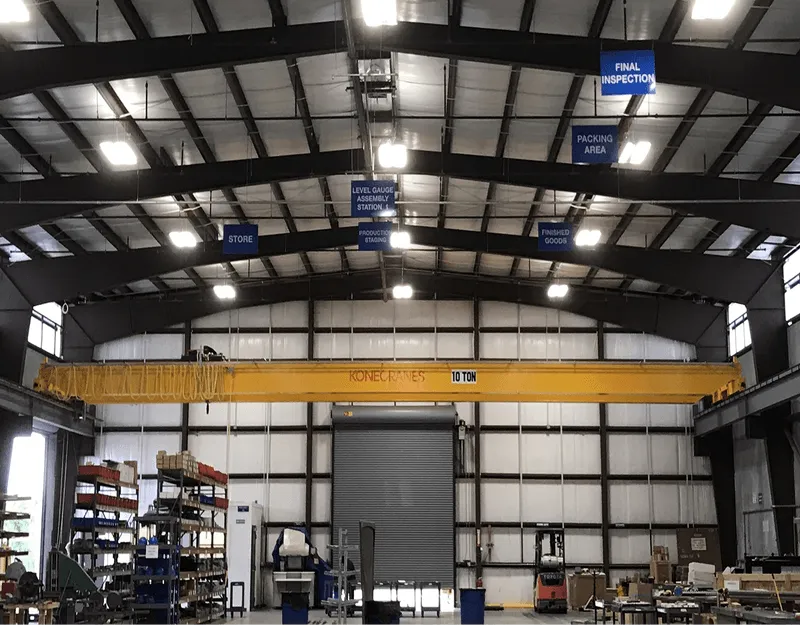
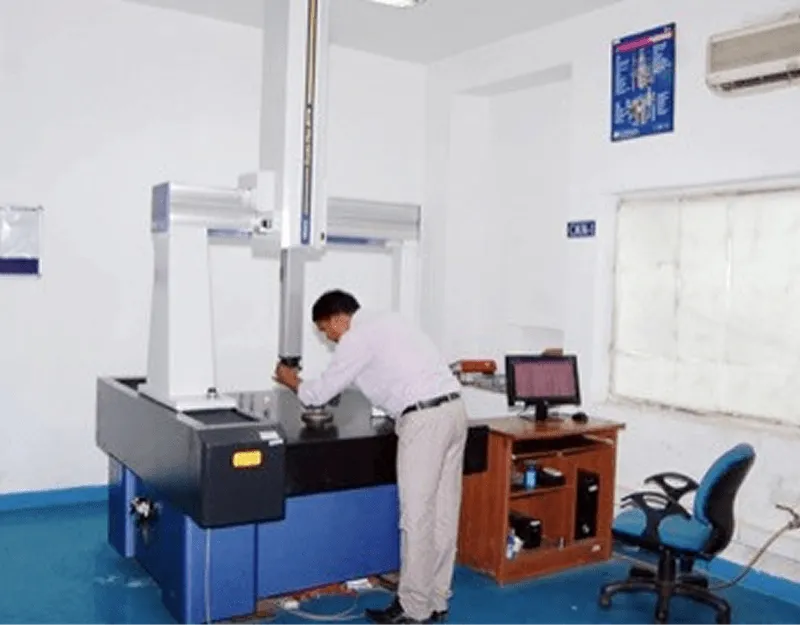
Bliss Americas manufactures magnetic level gauges and integrated level systems as part of the Bliss Anand group, with facilities and support across the USA, Europe (Netherlands), India, and the Middle East. Each dual-chamber system is engineered to the customer’s process data sheet - vessel pressure, temperature, fluid, interface requirement, hazardous-area classification, and DCS protocol - then fabricated, hydrotested, calibrated, and tagged in-house before shipment.

The company brings over 50 years of manufacturing heritage, 15+ international certifications, and 500+ custom instruments and engineered systems deployed worldwide, supplied as an ISO-certified manufacturer with ASME B31.3- and PED-compliant designs. (E-E-A-T figures are provided by the client brief - confirm against the live site before publishing; see Needs Verification.)

Industries Served

Oil Pump

Oil & Gas

Refineries, offshore platforms, storage tanks
chemical
Petrochemical & Chemical
Corrosive and hazardous liquid handling
Nuclear Power Plant
Power & Utilities
Boiler drum level, condensate monitoring
Sewage
Water & Wastewater
Reservoirs, treatment plants
Water Transportation
Marine & Shipbuilding
Ballast and bilge tank level monitoring
Pharma

Pharmaceuticals

Sterile and sanitary level control
Beverage

Food & Beverage Processing

Tanks containing liquids like syrups, oils, and dairy
Paper

Pulp & Paper Industry

Cemical treatment tanks, bleach towers, and storage vessels
Play video icon

Request a Quote for Your Application

Send your vessel and process details and our engineering team will configure a dual-chamber MLG-plus-radar system to suit — with chamber metallurgy, radar selection, hazardous-area certification, and DCS protocol confirmed against the application.

Include where possible:

Close-up of industrial machinery with pipes, valves, and a large white cylindrical tank.Stacked metal pipes with shiny flanged ends and welded joints lying on a surface.Four industrial flow meters with dial gauges mounted on metal pipes inside a wooden crate.Industrial facility with large white cylindrical tanks connected by pipes and valves outside a blue and white building.Several industrial metal pipes with flanges placed on a workbench in a factory setting.Close-up of a white industrial pipe assembly with a metal label plate showing specifications from RULISS Europe, mounted with bolts and flanges against a wooden background.Four parallel metal pipes with welded flanges and upright flange connectors on a flat surface.Close-up view of industrial white cylindrical tank with pipes, valves, and metal railings in a factory setting.Interior of a large industrial warehouse with a yellow 10-ton overhead crane and various equipment and pallets arranged below.Three men in business attire standing near a large blue industrial valve with a red wheel at a trade show booth.Large white industrial pressure vessels beneath a yellow overhead crane on a clear day.Green industrial metal valve with flanged ends and a horizontal handle on a dark blue background.Industrial metal gauge with bolts and valve handles against a dark textured background.Man operating a large coordinate measuring machine (CMM) in a white-walled industrial room with a computer workstation and office chair nearby.

Our Clients

Virtual Reality DevicesVirtual Reality DevicesVirtual Reality DevicesVirtual Reality DevicesVirtual Reality DevicesVirtual Reality DevicesVirtual Reality DevicesVirtual Reality DevicesVirtual Reality DevicesVirtual Reality DevicesVirtual Reality DevicesVirtual Reality DevicesVirtual Reality DevicesVirtual Reality DevicesVirtual Reality DevicesVirtual Reality DevicesVirtual Reality DevicesVirtual Reality DevicesVirtual Reality DevicesVirtual Reality DevicesVirtual Reality DevicesVirtual Reality DevicesVirtual Reality Devices

Our Certifications & Approvals

Virtual Reality DevicesVirtual Reality DevicesVirtual Reality DevicesVirtual Reality DevicesVirtual Reality DevicesVirtual Reality DevicesVirtual Reality DevicesVirtual Reality DevicesVirtual Reality DevicesVirtual Reality DevicesVirtual Reality DevicesVirtual Reality DevicesVirtual Reality DevicesVirtual Reality DevicesVirtual Reality DevicesVirtual Reality DevicesVirtual Reality DevicesVirtual Reality DevicesVirtual Reality DevicesVirtual Reality DevicesVirtual Reality DevicesVirtual Reality DevicesVirtual Reality Devices
Thank you! Your submission has been received!
Oops! Something went wrong while submitting the form.